Summer Photo Options | June - Early September
Estes Park Photo Tours
The best Rocky Mountain National Park Summer Photo locations pre-scouted for you
Yellow Wood Guiding offers private Summer Estes Park Photography Tours of Rocky Mountain National Park in Estes Park, Colorado.
Landscape Gallery Wildlife Gallery
In your booking email select one or a few of these options and I can plan a trip to try to get as many great shots as we can. In the summer we often have to drive 30 minutes to an hour to get to great locations. We usually have to choose Wildlife or Sunrise for a main target as they are often in different locations at the same time. Same is true for the evening at Sunset. Along the way we can often target other locations with ok to great light, or find some wildlife like smaller mammals but usually not the peak activity of dawn and dusk.
If you are not sure you can always have a "Guide's Choice" tour for either Landscape or Wildlife and we can target the best options that day will offer.
Unless otherwise stated these tour options can be part of a 4 or 8 hour trip. Don't see the option you want, we can customize a trip just for you.
Trail Ridge Road opens on the Firday before Memorial Day. It often snows that weekend and temporarily closes until it gets plowed and the ice melts.
Summer Sunrise
NOTE: Sunrises in the summer are often nice. About 70%-80% of the mornings we get great color in the mountains, clear blue skies, very few clouds, and just a bit of wind.
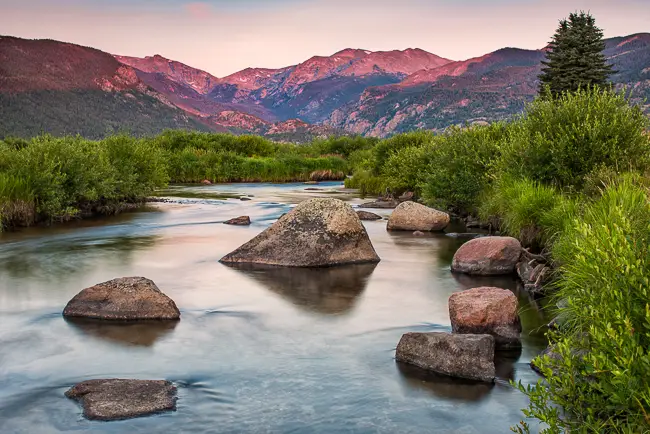
Moraine Park Sunrise
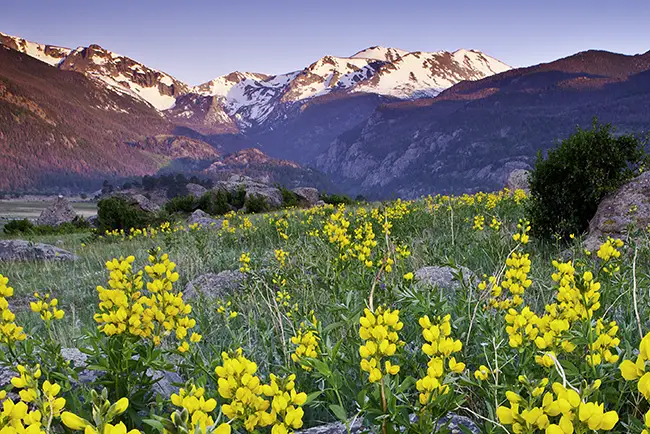
Moraine Park offers a great view of the mountains with a large grassy meadow. It is a very easy walk from the road to the river. June 10th - 20th can offer flower foregrounds with Golden Banner and Rocky Mountain Iris. This is a drive up location which requires a start of 30 minutes before sunrise. From here it is easy to visit a number of other locations and great for beginners.
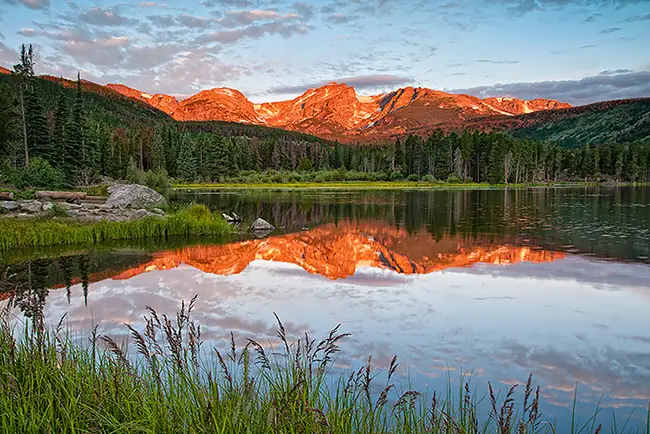
Sprague Lake / Storm Pass
Sprague Lake offers a great mountain range reflecting in a subalpine lake. Some mornings you can get great reflections, and the wide view offers a good number of compositions. If we have wind Storm Pass is a great shot that in peak color can be even better than Sprague Lake. This destination requires a start time 45 minutes before sunrise.
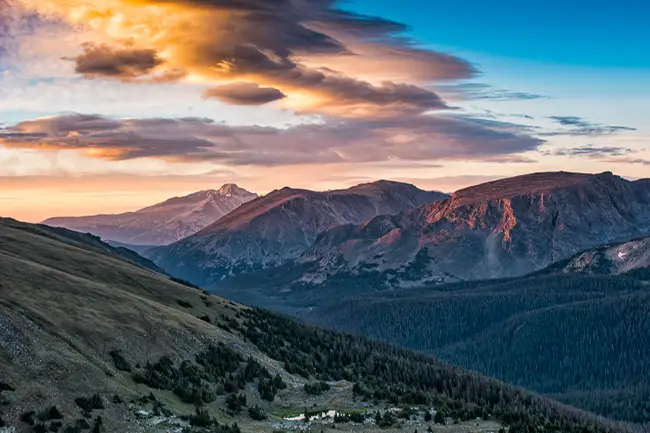
Tundra Sunrise - Roadside or Hiking
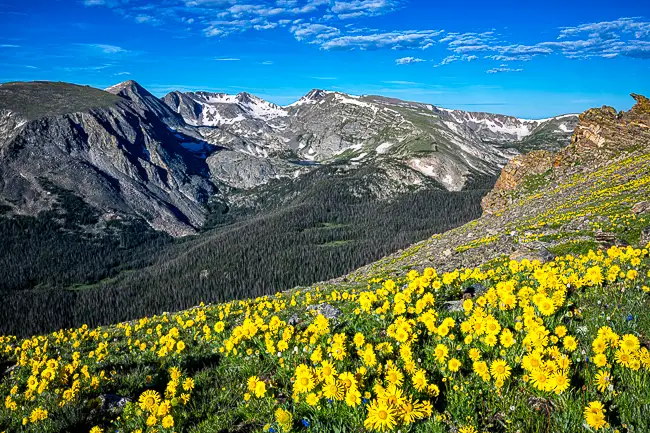
Sunrise is amazing anywhere in the park, but sunrise on the tundra can be breath taking, literally. It could be 20 degrees in the morning. But you can watch as the mountains come to life with the warm pinks and orange light of sunrise. This option requires a 1 hour before sunrise start for the roadside and 1 hour and 30 minutes for the hiking option. This option will offer wildlife shooting after sunrise after June 10th. NOT AVAILABLE after October 1st.
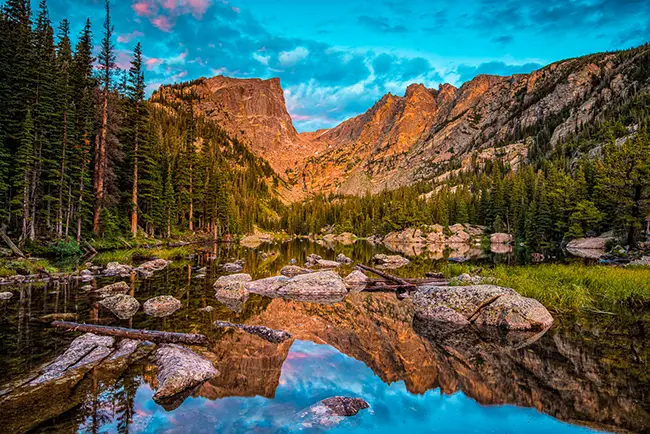
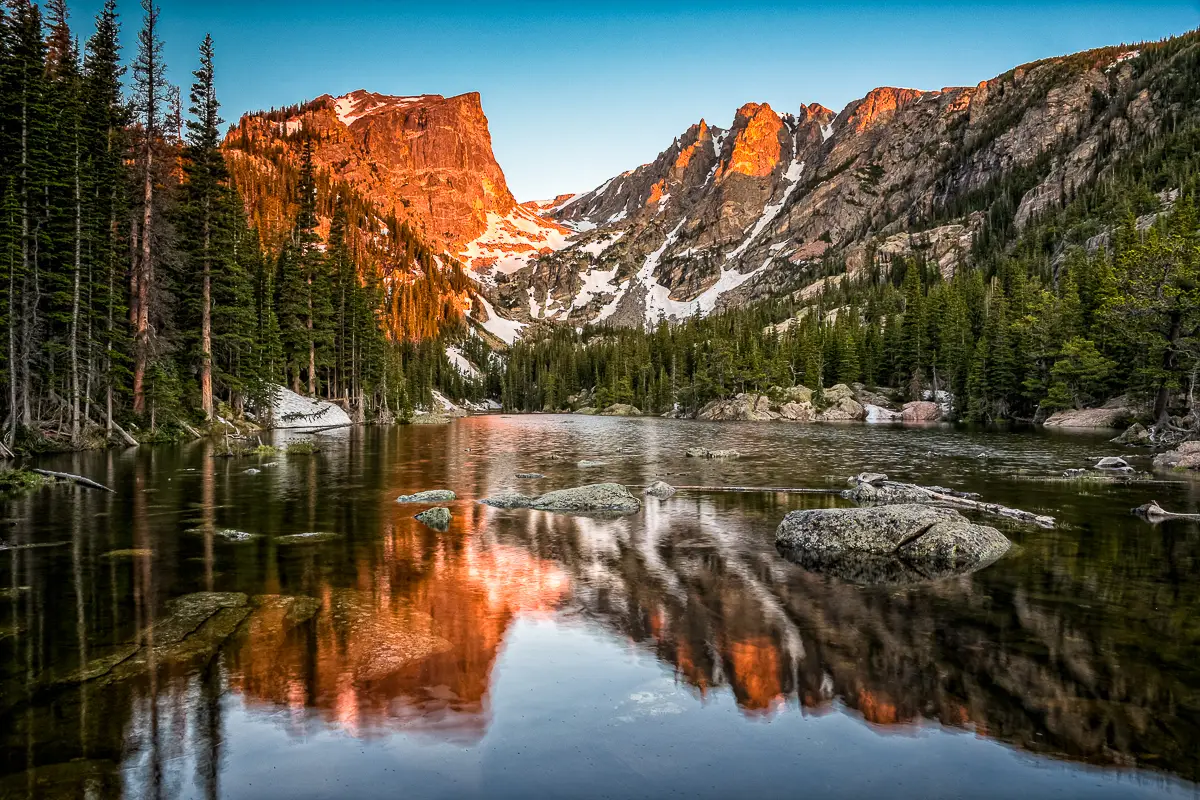
Dream Lake Sunrise - 4hr Easy /Medium Hike
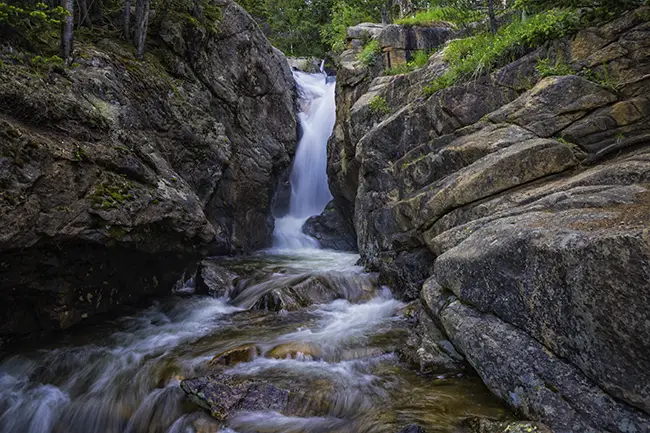
Sunrise at Dream Lake is one of the best 1 mile up hike photo spots in the park, and it produces some fantastic photos. It is an easy hike for fit individuals, medium difficulty for folks from lower elevations and are not as active. This tour requires a start of 1 hour and 30 minutes before sunrise. This trip takes about 3 hours with a few great side trips like Nymph Lake, a cascading stream, and some great overlooks. This option will not offer Elk shooting after sunrise.
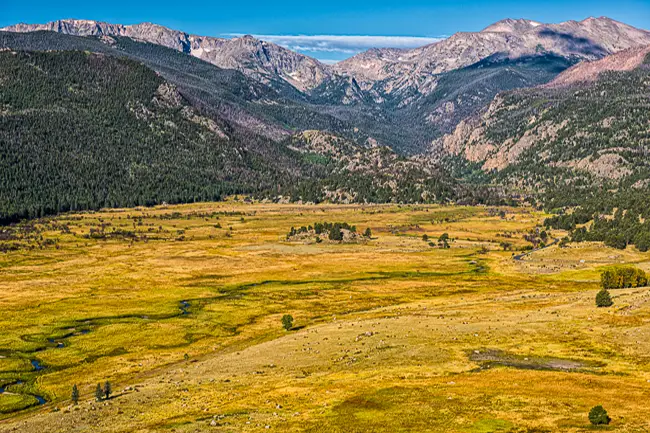
Moraine Park Overlook - Medium .25 mile Hike
Moraine Park is a grand glacial valley, and after this short but steeper 175 foot climb we gain a fantastic high view over the entire valley, with the river snaking below in the green meadows with a large view of Stones Peak. This short hike will take most fit people about 15 minutes with a few stops to catch your breath, so it requires a 45 minute before sunrise start. From this location we can also shoot a very nice view of Long's Peak, as well as a different view of the Mummy Range. From here we can go down into Moraine Park or travel the rest of the east side of the park for wildlife or landscape options.
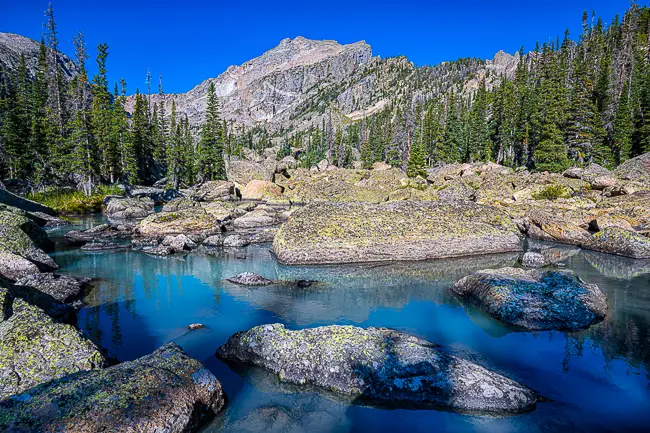
Dream Lake and Lake Haiyaha - 6hr Hike
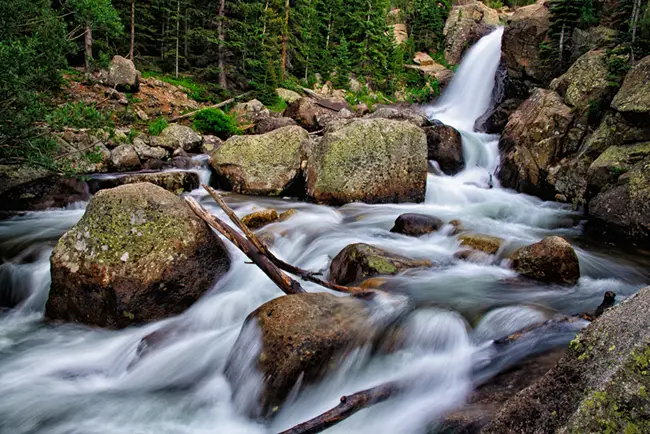
Like the tour option above we photograph Dream Lake at sunrise with the 1 hour and 30 minute before sunrise start. It is an easy hike for fit individuals, medium difficulty for folks from lower elevations and are not as active. After sunrise we can photograph the cascade below Dream Lake to produce the silky water effect. Then head up the additional 1 mile to Lake Haiyaha and Chaos Creek for potential reflection shots and amazingly giant rocks. The water of Lake Haiyaha is back to it's emerald color and not the milky blue only seen in 2022 and less in 2023. This option has no wildlife viewing.
Summer Sunset
NOTE: Sunsets in Rocky are not as reliable as sunrise. The standard summer weather pattern is blue skies in the morning with building clouds and a potential thunder storm in the afternoon. Generally right before sunset the clouds break, but there are a number of nights that the clouds never break. June sunsets are more reliable then July and August.
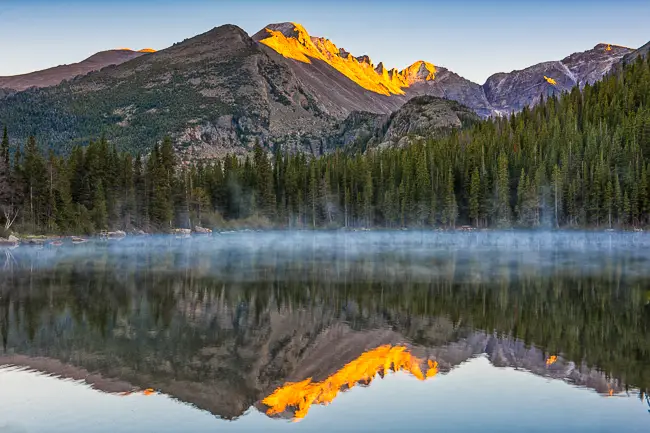
Bear Lake Sunset
This end of the tour option ends with an easy to get to mountain lake with great mountain scenery. One of the busiest lakes in the park, close to sunset the parking lot clears out and on clear nights the peaks glow. We drive up to the trail head and walk around to the far side of the lake for a potential great shot.
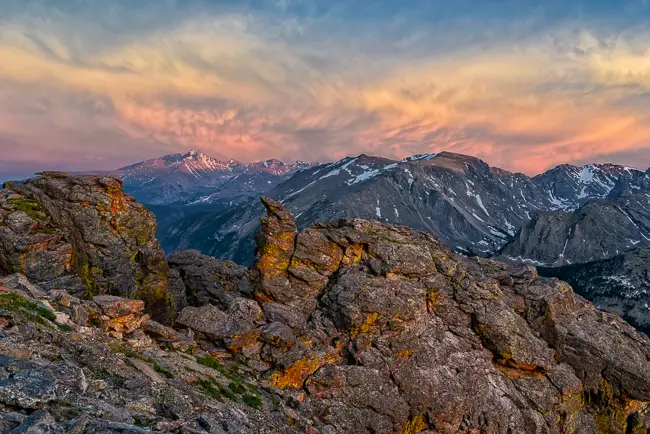
Tundra Roadside Sunset
Sunset on the tundra can be amazing but also very cold. Shot from locations Ansel Adams shot and from others even more spectacular. We can literally drive up a a few great spots, hop out, walk a few yards and take amazing shots if the weather gives us a good sunset. There are 3 potentially great shots in this one location.
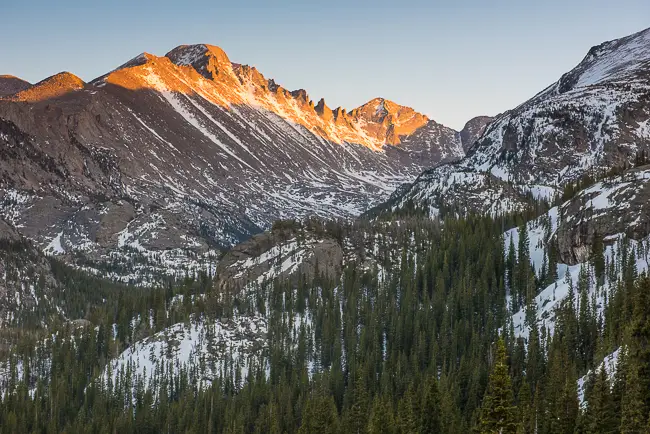
Nymph Lake and Above Sunset
There is an amazing view below Dream Lake of Long's Peak and Glacier Gorge about .8 miles from the trail head. This is a trip just for landscapes, small stream shots, a some macros. Because of the chance of afternoon /evening thunderstorms this is a gamble but if everything works out it can produce some great vast shots.
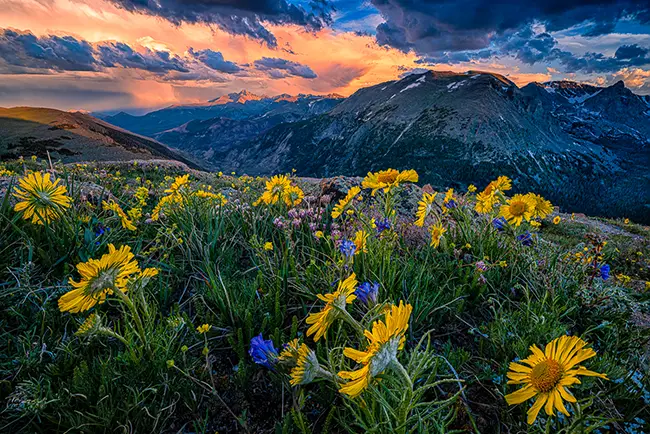
Tundra Sunset - 1 mile - Hiking
There are some amazing sunset options on the Tundra that are on a trail about a mile from the road. This location is pretty taxing as we will be hiking at almost 12,000 feet so its for only fit folks looking for shots most people never get. Be sure to bring a heavy coat, gloves and a hat because it can be very cold even the peak summer heat.